

How an industrial engineer named Shafi became a plant-signal sleuth.
What if your Spotify Wrapped… was for plants? That's basically the energy behind Shafiulla Hirehal Nurudin — "Shafi" to everyone — the founder of Greenspace Herbs. He started life on factory floors, fluent in throughput and root-cause analysis. Then a mentor nudged him into a lab full of leaves and resins, and Shafi's brain did what engineer brains do: ask way too many questions.
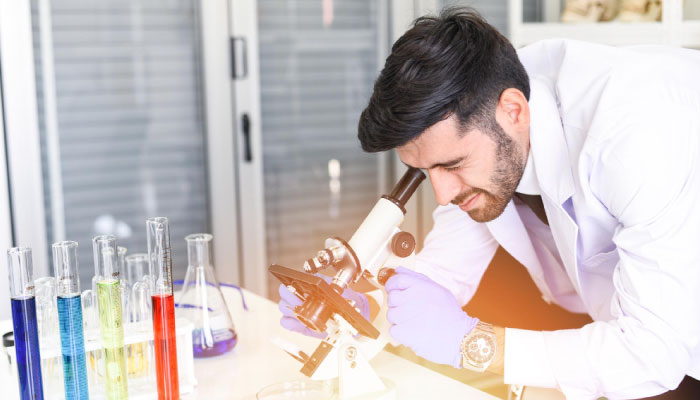
"I learned to read plants the way I once read production lines — signal by signal," he says. "Ayurveda gave me the blueprint; engineering gave me the tools."
Step one was super un-sexy: Shafi cracked open Ayurvedic texts, turned the frameworks into checklists, and built clean, repeatable extracts. Batch A matched Batch B matched Batch C. But then he noticed something weird: same chemical specs, different behavior in cells. Huh?
Quick explainer: frequency fingerprints (aka not magic)
Shafi's team started listening for what chemistry alone doesn't say — how materials vibrate and scatter energy. Think of it like giving each plant a spectral "username." They built a growing library of these frequency fingerprints and compared them with how the ingredients actually perform. In Shafi-speak: "Once you can see a herb's vibrational language, you stop treating it like a black box."
That pattern changes with structure and environment — so you can track quality, freshness, and even how an ingredient is likely to behave.
Engineering the silence (because signals hate noise)
Spectral science is picky. To keep the readouts clean, the lab runs in interference-suppressed rooms with calibrated sources, shielded cables, and ridiculous amounts of logging. Levels are kept low and safe. Shafi's rule: "Measure gently. Log everything. Assume you're wrong until it repeats."
The secret sauce: resonance-locking
Out of that discipline came Greenspace's guarded step: resonance-locking. After mapping an ingredient's signature, they condition it in a controlled chamber and check if the features they care about are stabilized — basically "pinning" the signal into the final material. The aim is paired delivery: the compound and its preserved vibrational profile, together.
So… does it do anything?
Early lab work (think organoids and ex-vivo models) points to promising directions: better relaxation indices, lower stress markers, dips in reactive oxygen species, and quicker tissue recovery when tuned ingredients ride alongside conventional actives. Reality check: these are research findings, not finished medicine. Shafi's big on receipts. "Inspiration isn't evidence," he says.
What makes this fit for now?
- Systems > silos: Plants as information hits different if you grew up streaming everything.
- Receipts or it didn't happen: The whole program is built around reproducible measurements.
- Tradition × tech: Ancestral knowledge gets a 21st-century interface — no culture-washing required.
- Planet vibes: Better characterization can mean smarter sourcing, less waste, and cleaner supply chains.
The human behind the lab coat
Shafi still lights up over a clean spectrum or a stubborn resonance peak finally tamed. His origin story isn't about a lightning bolt — it's about 20 years of calibration, curiosity, and not being afraid to start from page one of an old textbook.
"We don't treat herbs as folklore," he says. "We treat them as signals. Plants aren't just ingredients — they're information. Our job is to read it, preserve it, and put it to work for human health."
And the closer: "It took me 20 years to become an overnight scientist in quantum Ayurveda."
Bookmark this space. The next time you sip a botanical latte, you might be tasting a recipe that was engineered like a playlist — balanced by chemistry, tuned by signal, and designed to actually hit the right notes.