

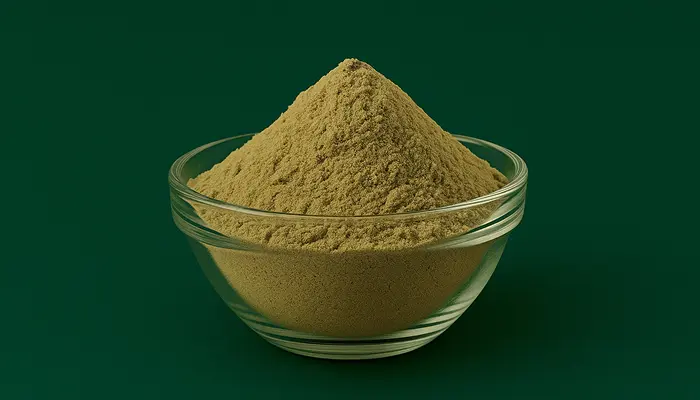
Mandukaparni (Centella asiatica Linn.)
A creeping, stoloniferous perennial of marshy ground and river banks — known in Ayurveda as Mandukaparni and standardized for its triterpenoid saponins, chiefly Asiaticoside and Madecassoside.
What is Mandukaparni?
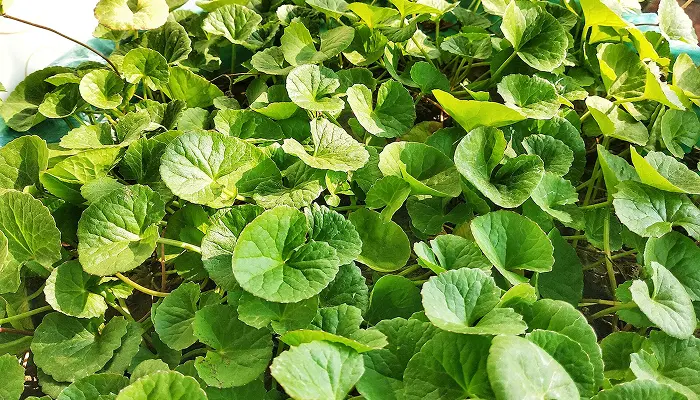
Centella asiatica Linn., known in Ayurveda as Mandukaparni and more widely as Gotu Kola, is a prostrate, stoloniferous perennial herb of the family Apiaceae. It spreads low across damp ground by means of slender, rooting stolons, forming dense mats of rounded, fan-shaped leaves. The plant has a long history of traditional use as a rejuvenating and memory-supporting botanical, and is valued today for a distinctive group of triterpenoid saponins.
Where does it grow?
Geographical distribution
Mandukaparni is native to India, China, Indonesia, Australia, the South Pacific, Madagascar, and Southern and Middle Africa. Its natural range follows warm, humid, water-rich regions across South and East Asia, the Pacific and Africa, where it occurs widely as a creeping ground herb.
Ideal growing conditions
As a moisture-loving species, Centella asiatica prefers marshy areas and river banks — consistently damp, low-lying ground in a warm, tropical to subtropical climate. It thrives on moist soils where its trailing stolons can root freely, allowing the plant to spread rapidly into a continuous mat.
Parts used
The whole aerial herb — the creeping stems together with the fan-shaped leaves — is the part used. This aerial material is the source of the plant's characteristic triterpenoid saponins and forms the basis of the standardized extract.
Chemical constituents
The chief chemical constituents of Mandukaparni are triterpenoid and saponin glycosides, principally Asiaticoside and Madecassoside, together with Asiatic acid. These triterpenes are the marker compounds by which the botanical is identified and standardized, and they define the profile of a quality-assured Centella extract.
Ayurvedic profile
Within Ayurveda, Mandukaparni is classed among the medhya herbs — those traditionally associated with the intellect and nervous system — and is described as a cooling, calming botanical conventionally characterised through the Ayurvedic attributes below.
- Rasa (taste): Tikta (bitter), Kashaya (astringent)
- Virya (potency): Sheeta (cooling)
- Vipaka (post-digestive effect): Madhura (sweet)
- Dosha action: Balances all three doshas, classically valued for its medhya (nervine) and rejuvenating action
Uses & benefits
Traditionally employed in the treatment of leprosy and skin disorders such as psoriasis and eczema, and to support memory. Mandukaparni is also used in respiratory ailments and for the strengthening of veins, including in varicose veins.
Valued as a blood purifier, for relieving stress, and as an immune booster — reflecting its classical role as a cooling, rejuvenating medhya botanical for everyday wellbeing.
Related botanical extracts
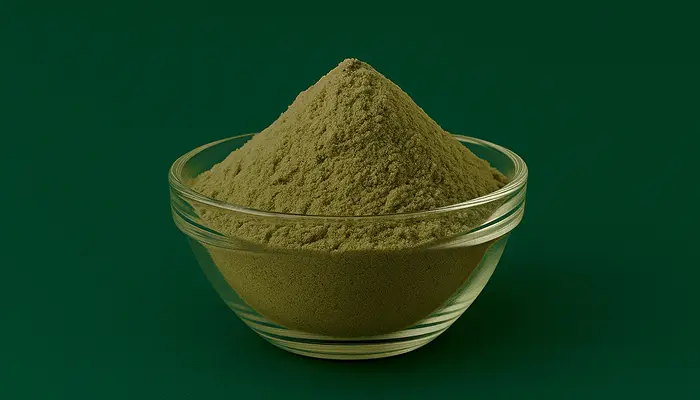
Source clinically researched botanicals.
Partner with GreenSpace Herbs for standardized, quality-assured extracts.