

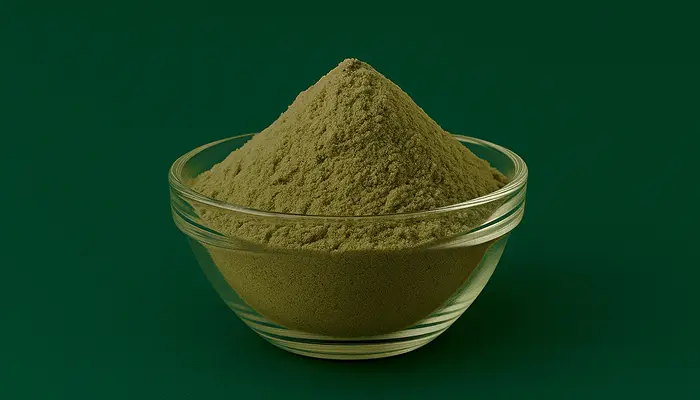
Senna (Cassia angustifolia)
A much-branching erect shrub of the Indian subcontinent whose leaves, pods and flowers concentrate the sennosides — the marker actives behind one of the most widely used natural laxatives.
What is Senna?
Cassia angustifolia, commonly known as Senna, is a much-branching erect shrub of the family Caesalpinaceae. It occurs naturally and is cultivated across many parts of India, where its leaves and pods have long been collected for their reliable purgative action. The botanical is best known for the way it increases the peristaltic movements of the colon by a local action directly upon the intestinal wall — the mechanism that underlies its traditional and modern use as a laxative.
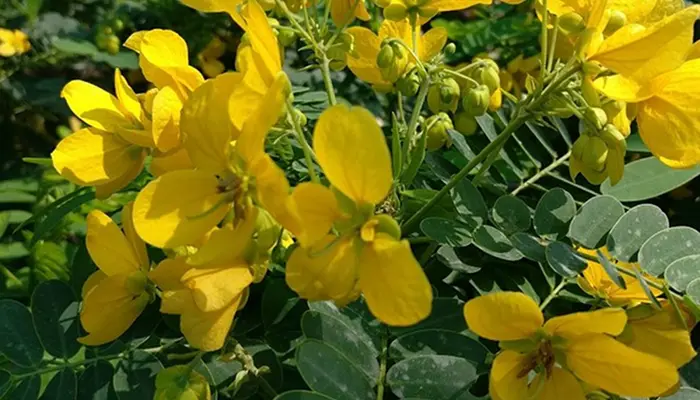
Where does it grow?
Senna grows both wild and under cultivation throughout many regions of India. As a hardy, much-branched erect shrub it is well suited to the warm, dry conditions of the subcontinent, and India remains a principal source of the leaf and pod material from which standardized extract is prepared.
Chemical constituents
The active compounds responsible for Senna's laxative properties are the sennosides. These are found in the leaves, pods and flowers of the plant and are regarded as the marker actives on which a quality Senna extract is profiled and standardized.
Parts used
The leaves, pods and flowers are the parts used. Each is a reservoir of the sennoside content, and together they supply the material from which the standardized botanical extract is produced.
Traditional & therapeutic uses
Senna has a broad record of traditional use. Beyond its principal role as a laxative, it has been employed as an:
- Expectorant
- Wound dresser
- Antidysenteric
- Carminative
- Laxative
The defining therapeutic action remains the stimulation of colonic peristalsis: by acting locally upon the intestinal wall, Senna promotes movement of the colon and so relieves constipation.
Uses & benefits
Increases the peristaltic movements of the colon by a local action upon the intestinal wall, giving a reliable laxative effect. Also traditionally used as an expectorant, wound dresser, antidysenteric and carminative.
The sennoside-rich leaves, pods and flowers form the basis for natural laxative and digestive-support formulations, where Senna's gentle stimulation of colonic movement is valued for relieving occasional constipation.
Related botanical extracts
Source clinically researched botanicals.
Partner with GreenSpace Herbs for standardized, quality-assured extracts.