

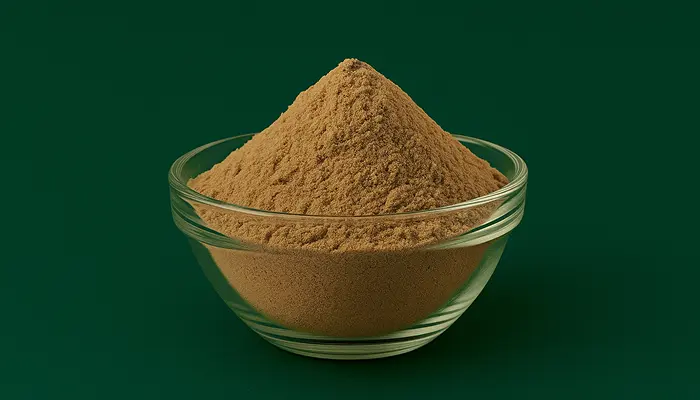
Karela (Momordica charantia Linn.)
A monoecious climber of the Indian plains and hills, bearing the familiar bitter gourd — a fruit rich in momordicine and charantin, and long studied for its blood-sugar-lowering, hypoglycaemic action.
What is Karela?
Karela, the bitter gourd, is botanically identified as Momordica charantia Linn., a member of the Cucurbitaceae family. It is a monoecious climber — carrying both male and female flowers on the same plant — that bears solitary, characteristically warty and intensely bitter fruits. The plant is found throughout India and is also widely cultivated, ascending to an altitude of around 1,500 metres.
The fruit and leaves owe much of their activity to alkaloids, the chief of which is momordicine, while the roots carry distinct bitter principles. From the fruits has been isolated charantin, the marker constituent most closely associated with the herb's hypoglycaemic, blood-sugar-lowering reputation in both traditional and experimental settings.
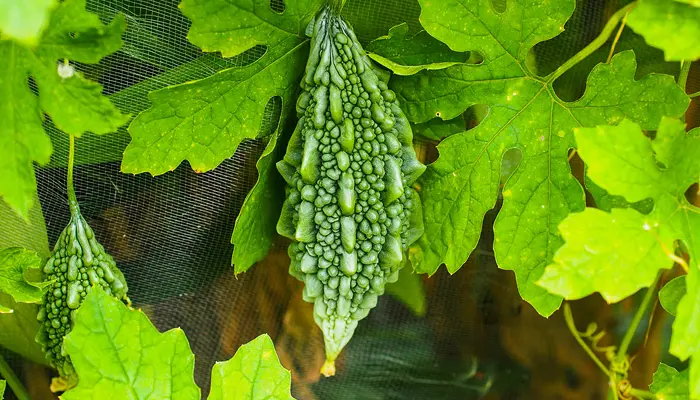
Where Does It Grow?
Karela is native to and distributed throughout India, where it grows both in the wild and under cultivation. As a vigorous climbing vine it is found across the plains and into the hills, reaching elevations of up to about 1,500 metres.
Geographical Distribution
- Found throughout India, both wild and commonly cultivated
- Distributed from the plains up to an altitude of around 1,500 m
Ideal Growing Conditions
- Warm climates of the Indian plains and lower hill ranges
- A monoecious climbing habit, trained over supports as a vine
- Tolerant of elevations up to approximately 1,500 metres
Parts Used & Active Constituents
The fruit is the most prized part of Karela, though the leaves and roots are also employed in traditional preparations. Each part carries a distinct profile of bitter, biologically active compounds.
- Momordicine — the chief alkaloid concentrated in the fruits and leaves
- Charantin — isolated from the fruits and the marker linked to blood-sugar lowering
- Bitter principles — found in the roots, contributing to the plant's characteristic bitterness
Hypoglycaemic Activity
Karela's best-documented action is its effect on blood sugar. Extracts of bitter gourd have been shown to produce hypoglycaemia in normal animals as well as in alloxan-induced diabetic rabbits, supporting its long-standing traditional use in the management of elevated blood sugar.
The effect has been traced in part to charantin. In experimental work, charantin isolated from the fruits, given in doses of 50 mg/kg orally, lowered the blood sugar by 12% in the fourth hour after administration.
Key observations
- Bitter-gourd extracts produced hypoglycaemia in both normal and alloxan-induced diabetic rabbits
- Charantin at 50 mg/kg orally lowered blood sugar by 12% at the fourth hour
Forms & Usage
Karela is consumed traditionally as the whole fruit and its juice, and is increasingly relevant as a standardized fruit extract calibrated for consistent bitter-principle content in modern formulations.
- Standardized extract — calibrated fruit extract for dose consistency
- Fruit & juice preparations — the traditional source of the herb's bitter, hypoglycaemic activity
Always consult a qualified herbalist or healthcare professional for personalised dosage and use.
Uses & benefits
A hypoglycaemic botanical: bitter-gourd extracts produce blood-sugar lowering in normal as well as alloxan-induced diabetic models, with charantin (50 mg/kg orally) shown to reduce blood sugar by 12% at the fourth hour — driven by momordicine and other bitter principles.
A standardized bitter-gourd fruit extract for metabolic and blood-sugar support — suited to formulations targeting healthy glucose balance and the traditional bitter-tonic role of Karela in everyday wellness.
Related botanical extracts
Source clinically researched botanicals.
Partner with GreenSpace Herbs for standardized, quality-assured extracts.