

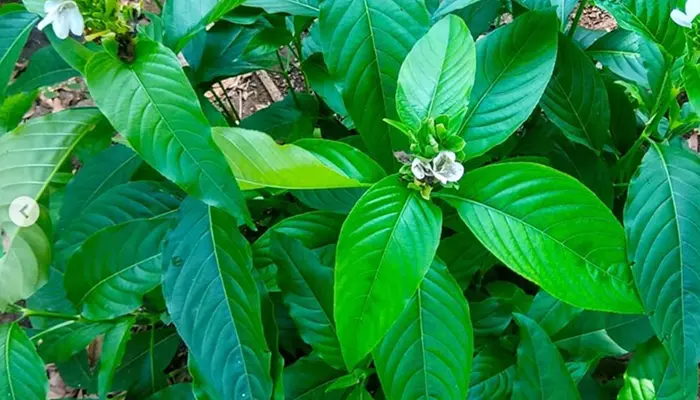
Vasaka (Adhatoda vasica Nees)
The lungs' natural guardian. A time-honored shrub of Ayurveda, Siddha and Unani tradition — widely used to support respiratory health and clear, comfortable breathing.
What is Vasaka?
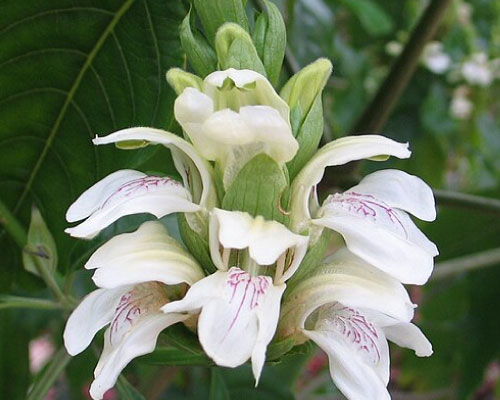
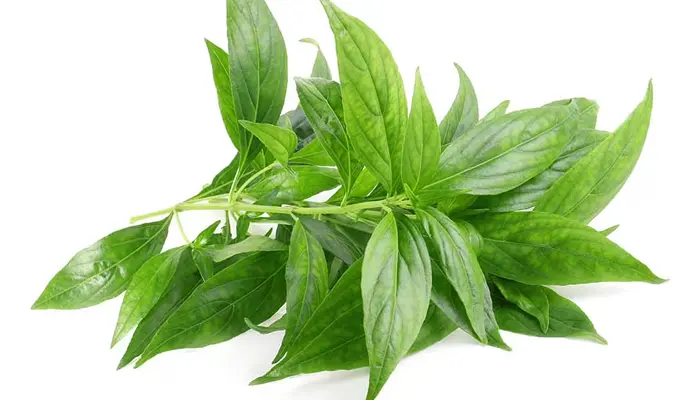
Vasaka is a tall, evergreen, and aromatic shrub native to the Indian subcontinent. Its botanical name is Adhatoda vasica Nees, though it is also referenced as Justicia adhatoda in some texts. The plant features large, lance-shaped leaves, white or purple-tinted flowers with dense spikes, and a strong, camphor-like aroma.
In Ayurveda, Vasaka is classified as a Pittashamaka herb — cooling and soothing — and its primary role is in supporting clear airways, normal mucus flow, and soothed mucous membranes. Its applications span classical Ayurveda, modern herbal practice, and phytopharmaceutical preparations.
Where Does It Grow?
Vasaka is widely distributed across the Indian subcontinent and adjacent regions. It also grows in other tropical and subtropical regions of Southeast Asia and parts of East Africa. Its resilience and adaptability make it suitable for wild harvesting as well as organized cultivation.
Geographical Distribution
- India — found across the plains and lower hills.
- Nepal — common in subtropical zones.
- Sri Lanka — across lowland and intermediate regions.
- Pakistan — in warmer, well-drained tracts.
- Bangladesh — throughout tropical lowlands.

Ideal Growing Conditions
- Climate — tropical and subtropical.
- Altitude — thrives at low to moderate elevations.
- Soil — prefers well-drained loamy soil, often cultivated along forest edges, roadsides, and gardens.
- Rainfall — adaptable across a range of moisture conditions.
Parts Used and Key Constituents
The leaves are the most commonly used part of the Vasaka plant, though flowers, roots, and bark also hold medicinal value.
Active Phytochemicals in Vasaka
- Vasicine — a powerful bronchodilator and expectorant.
- Vasicinone — formed by oxidation of vasicine; adds to the activity of the alkaloid fraction.
These compounds support a healthy inflammatory response and normal mucus clearance, making Vasaka an important herb for lung and throat care.
Respiratory Benefits of Vasaka
Vasaka's primary role is in supporting clear airways, normal mucus flow, and soothed mucous membranes:
- Loosens mucus and promotes its expulsion (expectorant action).
- Acts as a bronchodilator through the action of vasicine.
- Supports easy, comfortable breathing through the seasons.
- Found in numerous Ayurvedic respiratory formulations such as Vasavaleha, Sitopaladi churna, and Talisadi churna.
- Astringent by nature — long valued in classical Ayurvedic preparations.
- A decoction is traditionally used as a gargle to support throat and gum comfort.
Forms and Safe Usage
Vasaka is versatile and can be used in several preparations depending on the application.
Forms of Use
- Fresh Leaf Juice (Swarasa) — common in traditional fresh preparations.
- Powder (Churna) — used with honey or warm water.
- Syrups and Decoctions — readily available in pharmacies.
- Capsules / Tablets — standardized doses for systemic use.
- Topical Pastes — for external application to the skin.
Key Research Findings
Several research studies support Vasaka's traditional claims, especially in respiratory health:
- Vasicine has demonstrated bronchodilatory action comparable to theophylline in lab studies.
- Aqueous extracts of Vasaka have been evaluated in animal models for their effect on airway irritation reflexes.
- Leaf extracts show antioxidant and free-radical scavenging activity in laboratory assays.
Vasaka is a subject of growing interest in phytopharmaceutical research, especially for its potential in herbal respiratory formulations and plant-based breathing-support products.
Safety, Side Effects, and Precautions
Vasaka is generally well tolerated at customary doses. However, certain precautions should be kept in mind:
- Pregnancy — avoid use, particularly in early stages, as vasicine may stimulate uterine contractions.
- Children — safe in diluted, age-appropriate doses under professional advice.
- Co-medications — caution advised with anticoagulants or bronchodilators.
Whether as a soothing tea, potent syrup, or plant-based capsule, Vasaka offers a safe, plant-based alternative to synthetic expectorants — when used wisely and with professional guidance.
References
- Dhuley, J. N. (1999). Journal of Ethnopharmacology, 67(3), 361–365.
- Agharkar, S. P. (1991). Medicinal Plants of Bombay Presidency. Scientific Publishers.
- Chakraborty, A., & Brantner, A. H. (2001). Phytotherapy Research, 15(6), 532–534.
- Singh, S., et al. (2011). Pharmacological properties and analytical profile of Adhatoda vasica: A review. Der Pharmacia Lettre, 3(5), 71–88.
- Dhuley, J. N. (1997). Antioxidant and free radical scavenging properties of Adhatoda vasica Nees. Free Radical Biology and Medicine, 23(4), 576–581.
Uses & benefits
Bronchodilatory and expectorant activity driven by vasicine; supports normal mucus clearance, a healthy inflammatory response and the body's natural defenses. A long-standing adjunct for year-round respiratory comfort.
A core ingredient in herbal syrups, lozenges and respiratory-support formulations — Vasavaleha, Sitopaladi churna and Talisadi churna — delivered as leaf juice, powder, decoctions, capsules and tablets.
Source clinically researched botanicals.
Partner with GreenSpace Herbs for standardized, quality-assured extracts.