

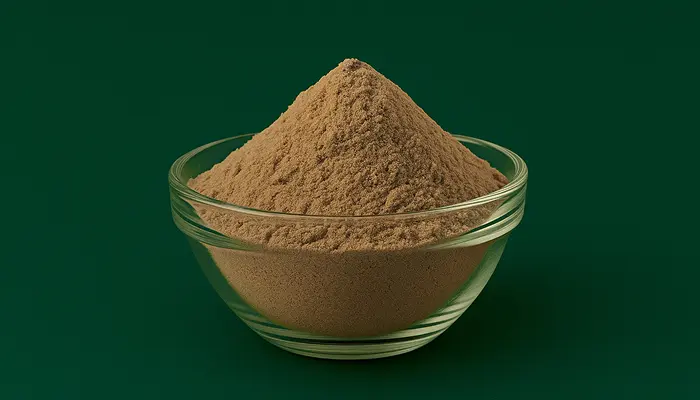
Ashwagandha (Withania somnifera Dunal.)
An erect, evergreen, tomentose shrub of the drier regions of India, cultivated for its medicinal roots — the source of the withanolide alkaloids that make Ashwagandha one of the most studied restorative botanicals in the world.
What is Ashwagandha?
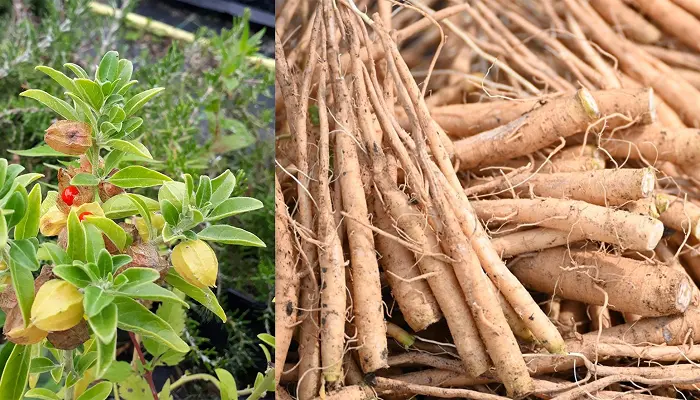
Withania somnifera Dunal., known across the Ayurvedic tradition as Ashwagandha (also transliterated Ashvagandha), is an erect, evergreen, tomentose shrub of the family Solanaceae. It is found growing wild throughout the drier parts of India, in waste places and on field bunds, and is also deliberately cultivated for its medicinal roots — the part of the plant collected, dried and processed into extract.
Where does it grow?
Ashwagandha is distributed throughout the drier parts of India, where it colonises waste places and the raised earthen bunds that border cultivated fields. Beyond these wild populations it is also brought under cultivation specifically for the harvest of its roots, which carry the botanical's characteristic activity.
Parts used
The roots are the part used. They are the reservoir of the plant's withanolide content and form the material from which the standardized botanical extract is prepared. It is for these medicinal roots that the shrub is cultivated.
Chemical constituents
The defining actives of Ashwagandha are its alkaloidal withanolides (withanoloids) — a family of steroidal lactones concentrated in the root. The total alkaloid fraction carries much of the plant's reported pharmacology, while individual constituents such as Withaferin A are marker molecules on which a quality Ashwagandha extract is profiled and standardized.
Reported activity
The withanolides have been reported to exhibit hypotensive, bradycardiac, antioxidant, antidepressant and respiratory-stimulating actions. The hypotensive effect is attributed mainly to an autonomic ganglion-blocking action. The total alkaloids have shown relaxant and antispasmodic effects against several spasmogens acting on intestinal, uterine, bronchial, tracheal and blood-vascular muscle. Withaferin A, in particular, exhibits potent anti-arthritic and anti-inflammatory activity.
Uses & benefits
The root alkaloids show hypotensive, bradycardiac and respiratory-stimulating action, with the blood-pressure effect arising from autonomic ganglion blockade. The total alkaloids exert relaxant, antispasmodic effects on intestinal, uterine, bronchial, tracheal and vascular muscle, while Withaferin A contributes potent anti-arthritic and anti-inflammatory activity.
A restorative, antioxidant and mood-supporting botanical. The withanolides' reported antioxidant and antidepressant actions underpin the use of standardized Ashwagandha root extract in adaptogenic, stress-resilience and general-wellness formulations.
Related botanical extracts
Source clinically researched botanicals.
Partner with GreenSpace Herbs for standardized, quality-assured extracts.