

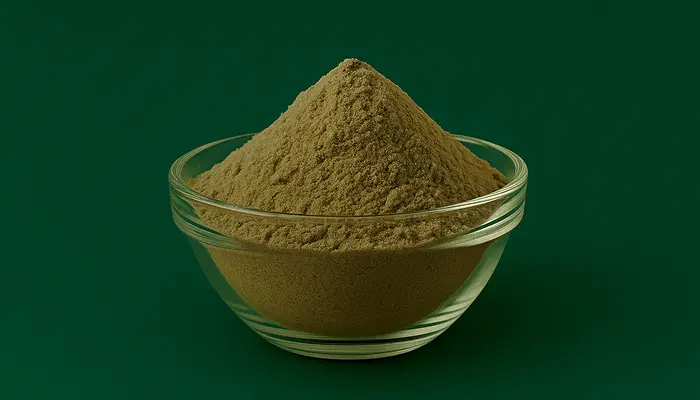
Tulsi (Ocimum sanctum L.)
The "Sacred Adaptogen" — revered in Ayurveda as "The Incomparable One," Tulsi balances stress, enhances immunity, and supports respiratory and metabolic health.
Ocimum sanctum, popularly known as Tulsi or Holy Basil, holds a revered place in Ayurveda and Indian tradition as both a spiritual protector and a medicinal powerhouse. Known as "The Incomparable One," Tulsi is celebrated for its wide-ranging therapeutic effects — balancing stress, enhancing immunity, and supporting respiratory and metabolic health. It is used in herbal teas, extracts, oils and Ayurvedic preparations across the world.
What is Tulsi?
Tulsi is a small aromatic shrub with oval-shaped leaves and purple or white flowers. Native to the Indian subcontinent, it has long been grown around homes and temples for both spiritual sanctity and medicinal value. The herb has multiple varieties, including Rama Tulsi, Krishna Tulsi and Vana Tulsi.
In Ayurveda, Tulsi is considered Katu (pungent) and Tikta (bitter) in taste, with Ushna virya (heating potency). It pacifies Kapha and Vata and is used in conditions involving respiratory congestion, inflammation, poor digestion and low immunity.
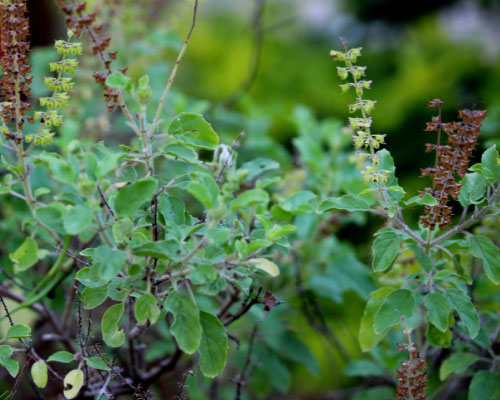
Where Does It Grow?
Tulsi is hardy, fast-growing, and often cultivated in home gardens, temple courtyards and organic farms. Native to the Indian subcontinent, it is now grown widely across South and Southeast Asia and beyond.
Geographical Distribution
- India
- Nepal
- Sri Lanka
- Myanmar
- Bangladesh
- Parts of the Americas and Europe (as a potted herb)

Ideal Growing Conditions
- Climate — warm, tropical to subtropical
- Altitude — suited to plains and low to moderate elevations
- Soil — fertile, well-drained ground
- Sunlight — thrives in full sun
Parts Used & Phytochemical Constituents
The leaves, flowers, seeds and essential oil are used in traditional medicine. The leaves are most commonly utilized in teas and extracts. Key active compounds include:
- Eugenol — anti-inflammatory, analgesic
- Rosmarinic acid — antioxidant, antimicrobial
- Ursolic acid — adaptogenic, anti-allergic
- Apigenin, luteolin and other flavonoids
- Essential oils — camphor, cineole, carvacrol
These constituents contribute to Tulsi's immunomodulatory, anti-stress, antimicrobial, anti-diabetic and anti-inflammatory effects.
Therapeutic Benefits of Tulsi
Tulsi is a true adaptogen, helping the body adapt to physical, emotional and environmental stressors. Its pharmacological effects extend across major systems including the respiratory, nervous, digestive and immune systems.
Stress & mental wellbeing
- Improves mental clarity and emotional stability
- Supports adrenal health during fatigue or burnout
- Traditionally used for meditation and spiritual clarity
Immunity & respiratory health
- Enhances immune cell activity (T-cells, NK cells)
- Increases resistance to viral, bacterial and fungal infections
- Useful in fevers, sore throats, colds and seasonal allergies
- Eases cough, asthma, bronchitis and sinusitis
- Antihistaminic and mucolytic properties soothe congestion
Metabolic & anti-inflammatory support
- Improves glucose tolerance and insulin sensitivity
- Reduces lipid peroxidation and supports cholesterol balance
- Used in Type 2 diabetes, metabolic syndrome and PCOS
- Helps manage arthritis, skin inflammation and chronic fatigue
- Strengthens digestion and alleviates gastritis, bloating and indigestion
How to Use Tulsi Safely
Tulsi is gentle and suitable for long-term daily use. It can be consumed in teas, fresh leaves, decoctions, powders or extracts.
- Fresh or dried leaves — used in teas and infusions
- Powder (Churna) — combined with honey, ghee or warm water
- Capsules / Tablets — standardized extracts for specific outcomes
- Essential oil — used in aromatherapy or diluted for topical use
Key Research Highlights
Tulsi's wide therapeutic spectrum is supported by modern clinical and pharmacological research.
- Adaptogenic effects — reduces stress parameters such as cortisol and improves cognitive function in high-stress individuals
- Immunomodulatory — enhances immune surveillance and reduces inflammation markers
- Hypoglycemic activity — clinical trials show improved blood glucose control in Type 2 diabetes patients
- Antimicrobial — effective against E. coli, Staphylococcus, Candida and respiratory viruses
Precautions & Contraindications
Tulsi is generally well-tolerated. However, a few considerations apply:
- Pregnancy — high doses may have mild uterine stimulant activity
- Bleeding disorders or surgery — may slow clotting; discontinue 1–2 weeks prior
- Hypoglycemia — monitor if using with anti-diabetic medications
- Nausea or reflux with excessive tea or extract intake
- Mild skin irritation with undiluted essential oil
- Mild sedation or interaction with CNS drugs (rare)
References
- Pattanayak, P., et al. (2010). Ocimum sanctum Linn. A reservoir plant for therapeutic applications: An overview. Pharmacognosy Reviews, 4(7), 95–105.
- Cohen, M. M. (2014). Tulsi – Ocimum sanctum: A herb for all reasons. Journal of Ayurveda and Integrative Medicine, 5(4), 251–259.
- Mondal, S., et al. (2011). Double-blinded randomized controlled trial of Tulsi extract on generalized anxiety disorder. Journal of Ayurveda and Integrative Medicine, 2(2), 66–74.
- Singh, S., et al. (2007). Adaptogenic and antistress activity of Ocimum sanctum. Indian Journal of Pharmacology, 39(2), 75–76.
- Goel, A., et al. (2015). Immunomodulatory and anti-inflammatory effects of Ocimum sanctum in experimental animals. Journal of Ethnopharmacology, 105(3), 386–392.
Uses & benefits
True adaptogen that helps the body adapt to physical, emotional and environmental stressors; immunomodulatory action enhancing T-cell and NK-cell activity; antimicrobial against E. coli, Staphylococcus, Candida and respiratory viruses; antihistaminic and mucolytic support in cough, asthma, bronchitis and sinusitis; hypoglycemic and anti-inflammatory effects validated in clinical and experimental studies.
Gentle daily tonic for stress adaptation, mental clarity and emotional stability; supports adrenal health during fatigue and burnout; improves glucose tolerance, insulin sensitivity and cholesterol balance; strengthens digestion and eases gastritis, bloating and indigestion; consumed as teas, powders, capsules and essential oils for everyday immune resilience.
Related botanical extracts
Source clinically researched botanicals.
Partner with GreenSpace Herbs for standardized, quality-assured extracts.