

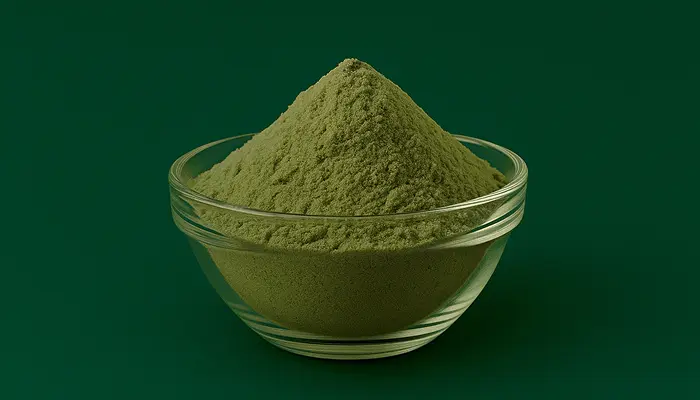
Neem (Azadirachta indica Juss.)
A large, evergreen tree found throughout the greater part of India, whose intensely bitter leaf is one of the most versatile remedies in indigenous medicine — chemically defined by nimbin, quercetin and ß-sitosterol.
What is Neem?
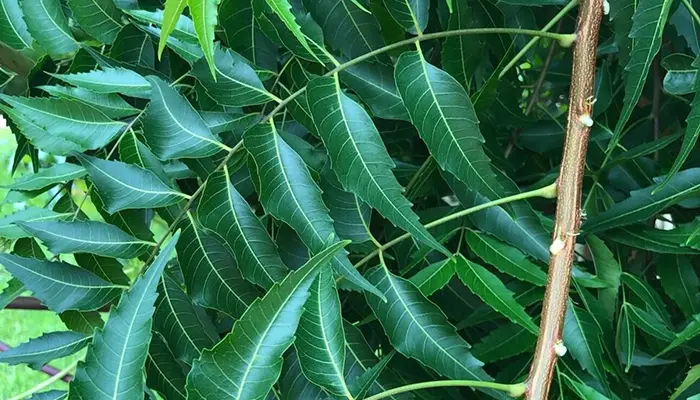
Neem (Azadirachta indica A. Juss., family Meliaceae) is a large, evergreen tree commonly found throughout the greater part of India, and often cultivated. Almost every part of the tree is bitter and finds application in indigenous medicine, where leaf, bark, seed and oil have each been used for distinct therapeutic purposes for centuries.
Its leaves contain chiefly nimbin, quercetin and ß-sitosterol — a triterpenoid, a flavonoid and a phytosterol respectively — which together underpin much of the plant's documented biological activity.
Where Does It Grow? — Geographical Distribution
Neem is native to the Indian subcontinent and grows commonly across the greater part of India, where it is both found wild and widely cultivated. A hardy tree, it tolerates a broad range of soils and climates, which has allowed it to become naturalised across much of the tropics.
Ideal Growing Conditions
The tree thrives in hot, semi-arid to sub-humid conditions and is notably drought-resistant once established. It favours well-drained soils and full sun, tolerating poor and marginal ground that would not support many other trees — a resilience that has made it a mainstay of agroforestry across India.
Parts Used
The leaf is the principal part used in the extracts described here, prized for its bitter principles and broad activity. In traditional practice the bark, seed and seed oil are also employed, but it is the leaf that yields the well-characterised standardized extract.
Phytochemistry
The leaves contain chiefly nimbin, quercetin and ß-sitosterol. The pronounced bitterness of nearly every part of the tree reflects its rich complement of limonoid (triterpenoid) constituents, of which nimbin is a representative marker.
Reported Pharmacological Activity
Neem extracts have been reported to possess anti-diabetic, anti-bacterial and anti-viral properties. The extract of the leaf yields fractions which markedly delay the clotting time of blood and act as a mild antiseptic.
The aqueous extract of neem leaf is hepatoprotective: it is known to decrease blood sugar levels and to prevent both adrenaline- and glucose-induced hyperglycaemia. Clinical studies with neem leaf extract indicate its effectiveness in helping to address ringworm, eczema and scabies.
Ayurvedic Properties
In Ayurveda neem (Nimba) is classified among the bitter, cooling botanicals valued for purifying the blood and skin:
- Rasa (taste): Tikta (bitter), Kashaya (astringent)
- Virya (potency): Shita (cooling)
- Vipaka (post-digestive effect): Katu (pungent)
- Dosha: Pacifies Kapha and Pitta
Uses & benefits
Reported anti-diabetic, anti-bacterial and anti-viral activity; leaf fractions that delay blood clotting time and act as a mild antiseptic; an aqueous leaf extract that is hepatoprotective and helps lower blood sugar, with clinical use against ringworm, eczema and scabies.
A bitter, blood- and skin-purifying botanical traditionally used to support healthy glucose metabolism, skin health and immune resilience — formulated into supplements, functional foods and topical applications.
Source clinically researched botanicals.
Partner with GreenSpace Herbs for standardized, quality-assured extracts.