

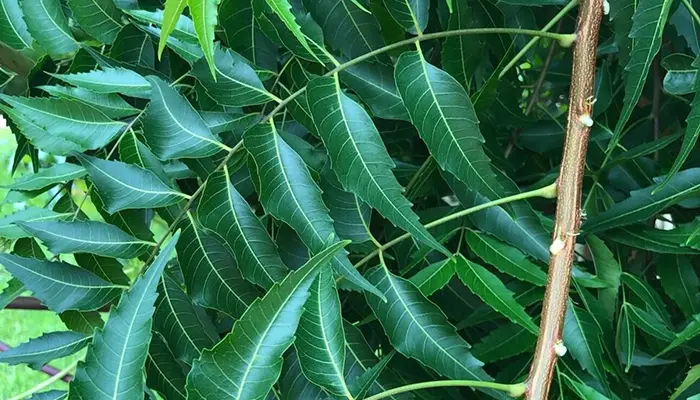
Neem (Azadirachta indica)
Revered in Ayurveda as Sarva Roga Nivarini — the healer of all diseases — Neem is a natural antimicrobial, blood purifier and detoxifier whose every part is used therapeutically.
What is Neem?
Azadirachta indica, commonly known as Neem, is one of the most important and versatile medicinal trees in traditional Indian medicine. Revered in Ayurveda as Sarva Roga Nivarini (the healer of all diseases), Neem is a natural antimicrobial, blood purifier and detoxifier. Every part of this tree — leaves, bark, seeds, flowers and roots — is used therapeutically.
Neem is a tall, evergreen tree with pinnate leaves, small white flowers and olive-like bitter fruits. Botanically classified as Azadirachta indica A. Juss., it is native to the Indian subcontinent and widely cultivated for its medicinal, agricultural and cosmetic applications. Ayurveda classifies Neem as a Tikta (bitter) and Kashaya (astringent) herb with Katu Vipaka (pungent post-digestive effect).

Where Does It Grow?
Neem is native to the Indian subcontinent and is now found throughout the tropics. Its core range spans India, Nepal, Pakistan, Sri Lanka and Bangladesh, and it has been naturalized further afield in Africa, Southeast Asia, Australia, and parts of the Americas and the Caribbean.
Neem is often found along roadsides, farms and dry forest belts. Its hardiness makes it a cornerstone of agroforestry and reforestation efforts in tropical countries.
Geographical Distribution
- India — the heartland of Neem cultivation and traditional use
- Nepal, Pakistan, Sri Lanka & Bangladesh — throughout the wider subcontinent
- Naturalized in Africa, Southeast Asia, Australia, and parts of the Americas and the Caribbean
Ideal Growing Conditions
- Climate — warm, tropical and subtropical regions
- Altitude — adaptable across plains and low-altitude belts
- Soil — drought-tolerant; thrives even in low-fertility soils
- Tolerance — exceptionally hardy, suited to dry and degraded land
Parts Used & Phytochemical Constituents
Almost every part of the Neem tree is used medicinally. The most commonly used parts include:
Leaves — for skin, blood and infections
The classic source for blood-purifying and antimicrobial preparations, used in dermatological and detox formulations.
Bark — for fever and gum health
Traditionally used to support oral health and in fever-reducing preparations.
Seeds and oil — for parasites, skincare and agriculture
Neem oil, pressed from the seeds, is applied externally and underpins natural skincare and herbal insecticides.
Flowers and fruit — for digestive and metabolic support
Used traditionally to support digestion and metabolic balance.
Key Active Compounds
- Azadirachtin — Neem's signature limonoid, studied for antiparasitic and anti-proliferative effects
- Nimbidin — anti-inflammatory and antimicrobial
- Flavonoids, tannins and fatty acids — especially concentrated in the oil
These bioactives contribute to Neem's antibacterial, antiviral, antifungal, antiparasitic, anti-inflammatory and antioxidant properties.
Neem is a classic Rakta Shodhak (blood purifier) in Ayurveda, often combined with herbs like Manjistha and Guduchi.
Therapeutic Uses of Neem
Skin & blood
- Clears acne, eczema, boils and fungal infections
- Supports detoxification through blood cleansing
Immunity & infection
- Enhances the body's defense against microbial infections
- Helps prevent recurrent skin and respiratory infections
- Kills lice, intestinal worms and fungal organisms
- Disrupts growth of bacteria such as Staphylococcus and E. coli
- Used in traditional formulations for malaria and viral fevers
Neem is frequently used in krimighna (antiparasitic) and jwarahara (fever-reducing) Ayurvedic formulations.
Oral & gut health
- Strengthens gums and prevents plaque buildup — Neem sticks are traditionally used as toothbrushes
- Helps manage gingivitis, mouth ulcers and bad breath
- Reduces inflammation in conditions like colitis
- Aids in managing non-alcoholic fatty liver disease (NAFLD)
Neem has wide-ranging applications in preventive, promotive and therapeutic care — especially in dermatology, oral hygiene, immunity and gut health.
How to Use Neem Safely
Neem is a potent herb that should be used thoughtfully. It is available in many forms for both internal and external use.
Common Preparations
- Neem oil — extracted from seeds, used externally
- Capsules / tablets — standardized for internal detox and skin health
Research Highlights
Neem's traditional uses are increasingly supported by modern research in pharmacology and ethnomedicine.
- Antibacterial — active against Staphylococcus aureus, Pseudomonas, E. coli and oral pathogens
- Antifungal — effective in treating Candida albicans and Aspergillus species
- Antidiabetic — studies show blood-glucose-lowering potential
- Hepatoprotective — leaf extract shown to protect liver tissue in experimental models
- Anticancer — azadirachtin and other compounds under study for anti-proliferative effects
Neem is widely used in research for developing herbal insecticides, natural skincare and immune boosters.
Precautions & Contraindications
Though Neem is generally safe when used externally or in moderate doses, high internal intake or improper use can cause side effects.
- Pregnancy and breastfeeding — Neem may stimulate uterine contractions; avoid use
- Children under 12 years — Neem oil is toxic if ingested
- Autoimmune conditions — Neem may overstimulate the immune response
- Infertility or trying to conceive — may interfere with sperm function
- Liver stress — possible with long-term or excessive intake
References
- Biswas, K., et al. (2002). Biological activities and medicinal properties of neem (Azadirachta indica). Current Science, 82(11), 1336–1345.
- Chatterjee, A., Pakrashi, S. C. (1995). The Treatise on Indian Medicinal Plants, Volume 3. Publication and Information Directorate, CSIR.
- Subapriya, R., Nagini, S. (2005). Medicinal properties of neem leaves: A review. Current Medicinal Chemistry – Anti-Cancer Agents, 5(2), 149–156.
- Siddiqui, B. S., et al. (2003). Triterpenoids from the leaves of Azadirachta indica and their cytotoxic activities. Phytochemistry, 63(7), 817–820.
- Alzohairy, M. A. (2016). Therapeutic role of Azadirachta indica (Neem) and their active constituents in diseases prevention and treatment. Evidence-Based Complementary and Alternative Medicine, 2016, 7382506.
Uses & benefits
Antibacterial, antifungal, antiparasitic and anti-inflammatory action across skin, immune and gut systems. Investigated for antidiabetic, hepatoprotective and anti-proliferative activity, and used in krimighna and jwarahara formulations.
A blood-purifying detox and immune-support ingredient for dermatology, oral hygiene and metabolic wellness — delivered as standardized capsules and tablets, and as seed oil for external skincare and natural insecticides.
Source clinically researched botanicals.
Partner with GreenSpace Herbs for standardized, quality-assured extracts.