

Chota Gokhru (Tribulus terrestris)
The Ayurvedic uroprotective and vitality enhancer — a revered herb with diuretic, nephroprotective, aphrodisiac and vitality-enhancing properties, used to support urinary tract health, male reproductive function, hormonal balance and muscle strength.
What is Chota Gokhru?
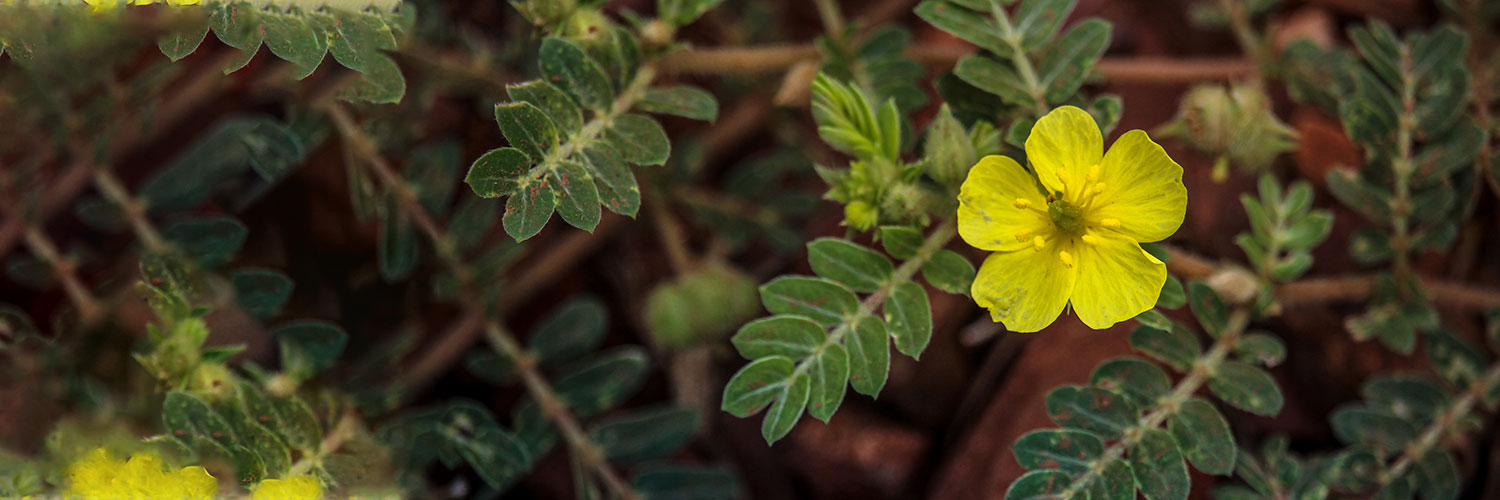
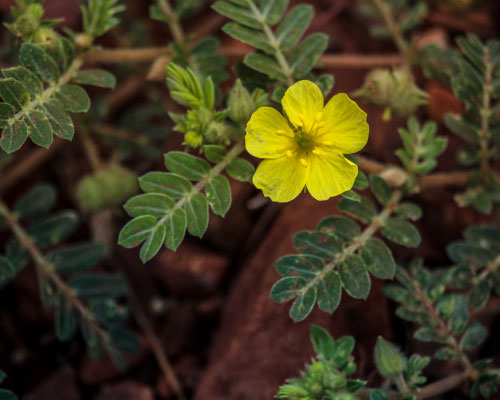
Tribulus terrestris is a prostrate, spreading annual herb with small pinnate leaves and yellow flowers. Its name Gokhru refers to the spiny burs or fruits that resemble the hoof of a cow ('Go' = cow, 'khura' = hoof). With its spiny fruits and creeping nature, Tribulus has found a place in numerous classical formulations for conditions ranging from kidney stones and painful urination to sexual debility and fatigue.
Today, it is recognized globally as a natural remedy for urinary, endocrine and metabolic support. In Ayurveda it carries the following classical properties:
- Rasa — Madhura (sweet), Tikta (bitter)
- Virya — Sheeta (cooling)
- Vipaka — Madhura (sweet post-digestive effect)
It pacifies the Pitta and Vata doshas, and is traditionally used to treat urinary infections, reproductive weakness, gout and inflammation.
Where Does It Grow?
It is commonly found as a wild herb in fields, roadsides and dry sandy areas, and is now cultivated for its medicinal fruits and aerial parts. Its hardiness and low water requirement make it suitable for semi-arid and arid regions.
Geographical Distribution
- India — widely distributed across plains and dry regions
- China and Australia
- Sri Lanka
- Southern Europe

Ideal Growing Conditions
- Climate — thrives in warm, dry semi-arid and arid regions
- Altitude — common across plains and low-lying dry tracts
- Soil — dry, sandy soils; tolerant of poor, marginal ground
- Rainfall — low water requirement; hardy and drought-tolerant
Parts Used & Phytochemical Constituents
The whole plant is used therapeutically, with special emphasis on the fruits and roots. Its activity is attributed to a distinctive group of steroidal saponins and supporting phytochemicals.
- Steroidal saponins — protodioscin and protogracillin
- Flavonoids and alkaloids
- Glycosides and sterols
These compounds offer diuretic, anti-inflammatory, adaptogenic, testosterone-modulating and antioxidant benefits — with protodioscin recognized as the signature bioactive behind much of Tribulus's reproductive and vitality activity.
Therapeutic Benefits of Tribulus terrestris
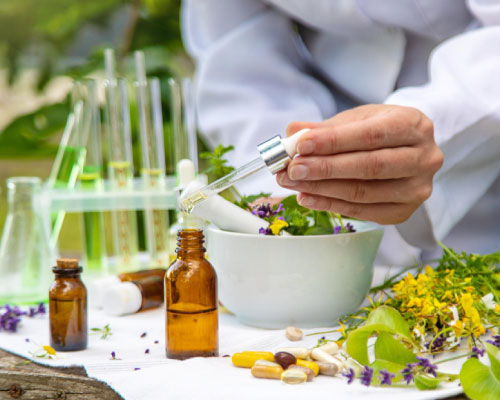
Chota Gokhru supports a wide range of functions, particularly in renal health, reproductive function, muscle strength and metabolic regulation.
Urinary & renal support
- Acts as a diuretic, increasing urine output and flushing toxins
- Reduces burning micturition, dysuria and urinary tract infections
- Prevents and helps dissolve renal and bladder calculi (kidney stones)
- Used in Mutrakrichha, Ashmari and Mutraghata conditions
- Commonly found in Ayurvedic formulations like Gokshuradi Guggulu and Punarnavadi Kashayam
Reproductive & hormonal health
- Improves erectile function and testosterone levels
- Traditionally used in male infertility and sexual debility
- Useful in female reproductive health for PCOS and ovulation regulation
- Supports ovarian function and regular cycles in women
Strength & vitality
- Improves lean muscle mass and athletic endurance
- Popular in sports nutrition and Ayurvedic Rasayana therapy
- Acts as a natural anabolic without hormonal suppression
Anti-inflammatory & metabolic
- Useful in gout, arthritis and joint stiffness
- Combines well with herbs like Guduchi and Punarnava
- Assists in managing hormonal acne and metabolic syndrome
How to Use Chota Gokhru Safely
Chota Gokhru is available in various traditional and modern forms, depending on the indication and individual constitution. Common forms include:
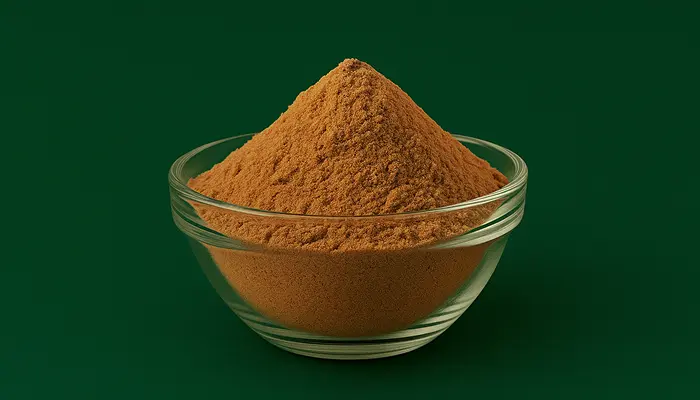
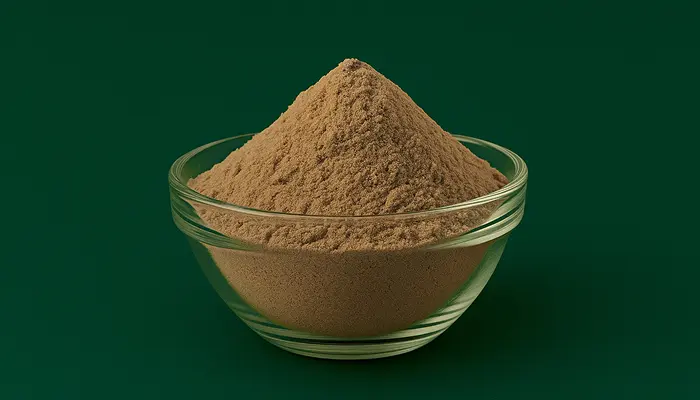
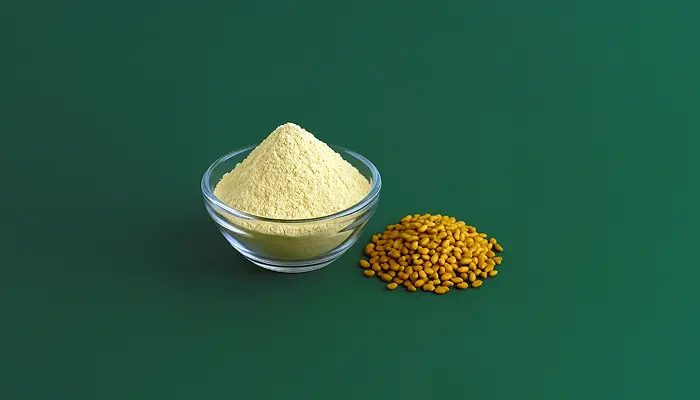
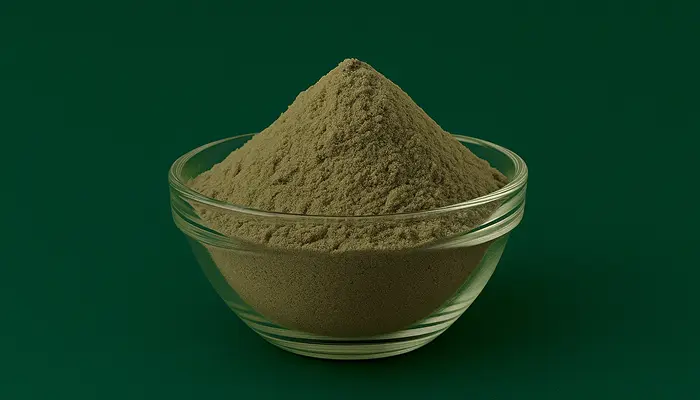
- Churna (Powder) — taken with water, honey or ghee
- Kashayam (Decoction) — used in urinary or inflammatory conditions
- Capsules / Tablets — standardized for saponin content (typically 40–60%)
- Guggulu-based formulas — combined with anti-inflammatory agents
- Oil formulations — used externally in muscle and joint massage
Key Research Highlights
Tribulus has been widely studied for its role in urogenital health, hormone modulation and sports performance.
- Urinary support — diuretic activity and renal stone inhibition confirmed in animal models
- Testosterone modulation — some human studies report increased libido and hormonal balance
- Spermatogenesis — animal studies show improved sperm quality and motility
- Anti-inflammatory action — saponins shown to reduce inflammatory mediators in arthritis models
- Sports performance — mixed results in trials; may benefit when used synergistically
Its use in formulations like Gokshuradi Guggulu is well-documented in Ayurvedic pharmacopeias for urogenital and musculoskeletal disorders.
Precautions & Contraindications
Tribulus is well tolerated but may require moderation in specific contexts:
- Pregnancy and lactation — not advised unless under clinical guidance
- Low blood pressure — Tribulus may have mild hypotensive effects
- Kidney impairment — use under supervision in chronic renal disease
Tribulus terrestris (Chota Gokhru) is a time-honored Ayurvedic herb with remarkable diuretic, aphrodisiac and anti-inflammatory properties. Whether used for urinary tract health, reproductive rejuvenation, hormonal balance or muscle support, it provides a safe, plant-based solution for enhancing physical resilience and internal balance. Its adaptability across the renal, endocrine, sexual and musculoskeletal systems makes it a valuable herb in both preventive and restorative healthcare, supported by classical wisdom and growing scientific interest.
References
- Adimoelja, A. (2000). Phytochemicals and the breakthrough of traditional herbs in the management of sexual dysfunctions. International Journal of Andrology, 23(S2), 82–84.
- Gauthaman, K., Adaikan, P. G., Prasad, R. N. V. (2002). Aphrodisiac properties of Tribulus terrestris extract in normal and castrated rats. Life Sciences, 71(12), 1385–1396.
- Kumar, A., et al. (2006). Evaluation of diuretic activity of Tribulus terrestris in rats. Journal of Ethnopharmacology, 104(3), 322–325.
- Mada, S. B., et al. (2013). Antilithiatic activity of aqueous extract of Tribulus terrestris in rats. Journal of Pharmacognosy and Phytotherapy, 5(8), 143–148.
- Mishra, R., et al. (2014). Tribulus terrestris Linn: A review on its phytochemical and pharmacological profile. International Journal of Pharmaceutical Sciences Review and Research, 27(2), 36–43.
Uses & benefits
Steroidal saponins, led by protodioscin, drive diuretic activity that increases urine output and inhibits renal stone formation, while reducing dysuria and urinary tract infections. The same compounds modulate testosterone and support spermatogenesis, improving libido and sperm quality in study models, and exert anti-inflammatory action by reducing inflammatory mediators relevant to gout and arthritis. Classical use in Gokshuradi Guggulu reflects its uroprotective and musculoskeletal role.
A widely used ingredient in men's health, vitality and sports-nutrition supplements, standardized for saponin content (typically 40–60%). As a natural anabolic without hormonal suppression, it supports lean muscle mass, athletic endurance and Rasayana rejuvenation, and is also applied in women's reproductive formulations for PCOS, ovulation and hormonal balance. Delivered as churna, decoction, capsules, guggulu-based formulas and topical oils.
Source clinically researched botanicals.
Partner with GreenSpace Herbs for standardized, quality-assured extracts.