

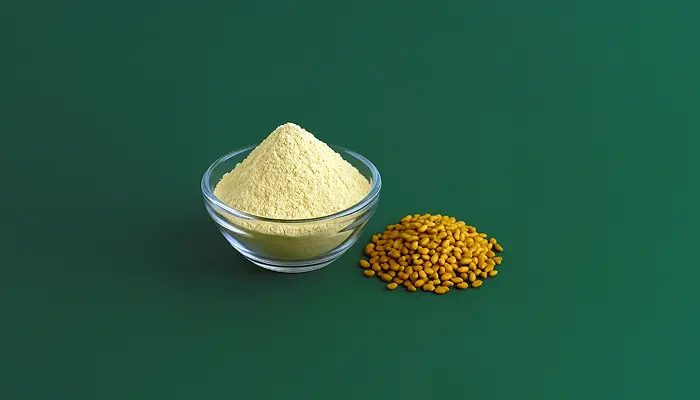
Fenugreek (Trigonella foenum-graecum)
A culinary and medicinal herb used for centuries across Ayurveda, Unani and Greco-Arabic medicine — best recognized today for regulating blood sugar, cholesterol, digestion and lactation, and increasingly validated by modern clinical research.
What is Fenugreek?
Fenugreek is a small annual herb with light green trifoliate leaves, slender stems, and golden-yellow rhomboid seeds carrying a distinct bitter aroma. In Ayurveda it is known as Methi or Methika, and is prized as a metabolic regulator and lactation enhancer — a kitchen spice that has earned its place as a clinically supported botanical.
Within the classical framework, fenugreek is classified by its energetic qualities:
- Rasa: Tikta (bitter), Kashaya (astringent)
- Virya: Ushna (heating)
- Vipaka: Katu (pungent post-digestive effect)
It is used primarily to balance Kapha and Vata, and is indicated for digestive sluggishness, high blood sugar, excessive mucus, hormonal imbalance, and postpartum weakness.
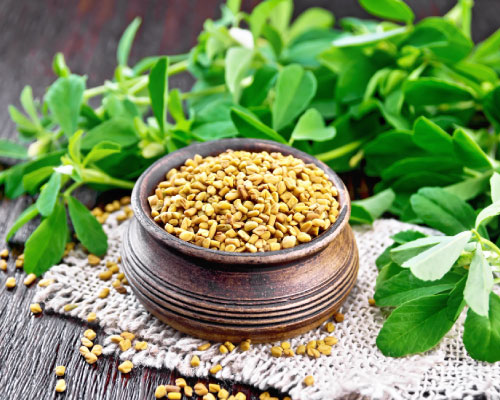
Where Does It Grow?
Native to the eastern Mediterranean and cultivated widely across the warm, dry belts of the Old World, fenugreek has long been grown both as a spice crop and as a leafy vegetable.
Geographical Distribution
- Southern Europe
- Western Asia
- Sri Lanka
- The Indian subcontinent — India (Rajasthan, Madhya Pradesh, Gujarat, Uttar Pradesh)

Ideal Growing Conditions
- Climate: Cool, dry climate; ideal for the rabi (winter) season in India
- Soil: Loamy or sandy soil with good drainage and neutral pH
- Crop cycle: Typically grown as a short-duration crop (90–120 days), and also cultivated as a leafy vegetable (methi greens)
Parts Used and Phytochemical Constituents
The seeds are most commonly used medicinally, though the leaves also carry therapeutic value and are used in both culinary and medicinal preparations.
Key Bioactive Compounds
- Diosgenin — a steroidal saponin that supports hormone balance
- Trigonelline — contributes to hypoglycemic action
- 4-hydroxyisoleucine — stimulates insulin secretion
- Galactomannan — a soluble fiber for blood sugar and appetite control
Together these compounds deliver antidiabetic, lipid-lowering, galactagogue, antioxidant, and anti-inflammatory actions.
Therapeutic Benefits
Fenugreek is widely valued for its role in metabolic regulation, women's health, digestive support, and hormonal modulation.
Blood sugar & metabolic support
- Slows carbohydrate absorption via soluble fibers
- Reduces fasting and postprandial glucose levels
- Useful in Type 2 diabetes, prediabetes, and metabolic syndrome
Cholesterol & cardiovascular
- Reduces total cholesterol, LDL, and triglycerides
- Inhibits lipid peroxidation, protecting vascular integrity
Women's health & lactation
- Enhances milk production in lactating mothers (galactagogue)
- Used in postpartum tonics to restore strength and hormonal balance
- May reduce symptoms of PCOS, including irregular periods and hirsutism
Digestion & appetite
- Reduces calorie intake and helps curb sugar cravings
- Mildly laxative, easing constipation in dry Vata constitutions
Anti-inflammatory
- Traditionally used in arthritis and joint swelling
- External application of fenugreek seed paste relieves inflammation and boils
How to Use Fenugreek Safely
Fenugreek is highly versatile and may be used as a food, supplement, tea, powder, or decoction, depending on individual needs.
Common Forms
- Powder (Churna): Mixed with water, milk, or honey
- Capsules / Tablets: Standardized extracts or seed powder
- Topical paste: For inflammation or skin issues
Key Research Highlights
Fenugreek's traditional uses are backed by substantial clinical and preclinical research.
- Blood sugar control: Double-blind studies show significant reduction in HbA1c and fasting glucose
- Lactation enhancement: Randomized trials confirm increased milk production in postpartum women
- Cholesterol management: Meta-analyses confirm reduction in LDL and triglycerides
- Anti-inflammatory action: Seed extracts reduce pain and swelling in arthritis models
- PCOS symptom relief: Improvement in menstrual regularity and hormonal markers in pilot studies
Precautions and Contraindications
Fenugreek is generally safe, though high doses or unsupervised use may have side effects.
- Pregnancy: High doses may stimulate uterine contractions
- Diabetes medication: May enhance effects — monitor blood sugar
- Hypothyroidism: Some evidence suggests caution in thyroid-sensitive individuals
- Diarrhea or bloating, especially with unsoaked seeds
- Body odor resembling maple syrup, due to the sotolone compound
Fenugreek bridges tradition and modern science as a botanical powerhouse for blood sugar regulation, women's health, digestion, and hormonal balance — offering multi-dimensional support for metabolic resilience, vitality, and well-being.
References
- Sharma, R. D., Raghuram, T. C., Rao, N. S. (1990). Effect of fenugreek seeds on blood glucose and serum lipids in Type I diabetes. European Journal of Clinical Nutrition, 44(4), 301–306.
- Sreeja, S., Anju, V. S., Sreeja, S. (2010). In vitro estrogenic activities of fenugreek seeds. Indian Journal of Medical Research, 131, 814–819.
- Srinivasan, K. (2006). Fenugreek (Trigonella foenum-graecum): A review of health beneficial physiological effects. Food Reviews International, 22(2), 203–224.
- Yadav, U. C., Baquer, N. Z. (2014). Pharmacological effects of Trigonella foenum-graecum L. in health and disease. Pharmaceutical Biology, 52(2), 243–254.
- Goyal, R. K., et al. (2001). Effect of fenugreek on blood lipid profile in diabetes. Indian Journal of Pharmacology, 33(6), 416–417.
Uses & benefits
Antidiabetic and lipid-lowering actions driven by soluble fibers and insulinotropic compounds — reducing fasting and postprandial glucose, total cholesterol, LDL and triglycerides, with anti-inflammatory support in arthritis and joint conditions.
A galactagogue and metabolic-wellness ingredient for postpartum lactation tonics, appetite and sugar-craving control, women's hormonal balance including PCOS support, and digestive regularity.
Source clinically researched botanicals.
Partner with GreenSpace Herbs for standardized, quality-assured extracts.