

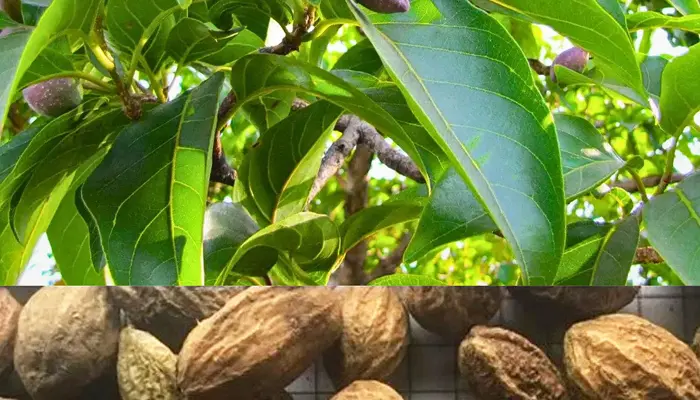
Haritaki (Terminalia chebula)
The "King of Medicines" of Ayurveda — a rejuvenating, digestive and detoxifying fruit revered for restoring gut integrity, sharpening the mind and promoting longevity.
What is Haritaki?
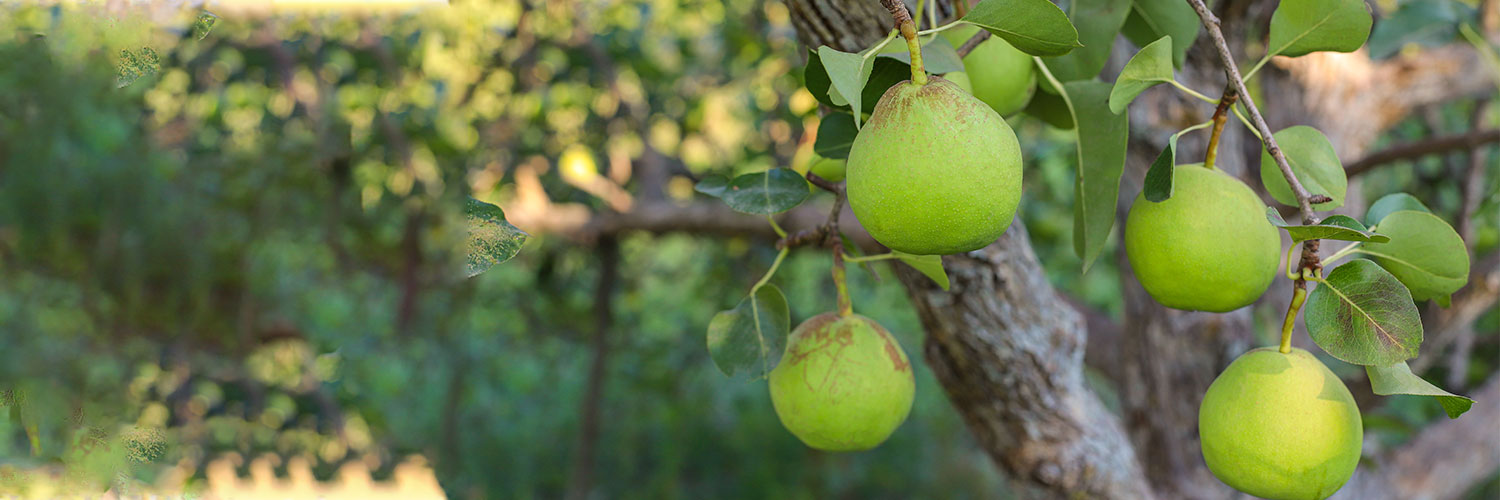
Haritaki, botanically identified as Terminalia chebula, is one of the most esteemed herbs in Ayurvedic medicine, referred to as the "King of Medicines" (Kayastha). It is a medium-to-large deciduous tree that produces oval, greenish-yellow fruits, which are collected, dried and used for their medicinal benefits. The dried fruit is highly revered in Ayurveda, Siddha, Unani and Tibetan medicine as a restorative and longevity-promoting agent.
Celebrated for its potent rejuvenating, digestive and detoxifying properties, Haritaki supports a wide spectrum of body functions — from regulating bowels and nourishing the nervous system to promoting longevity and clarity of mind. It is classified as Rasa Panchaka, carrying five of the six tastes (all except salty), a unique quality in Ayurvedic pharmacology. It is also one of the three fruits of Triphala, the classical tridoshic formulation.
Where Does It Grow?
Haritaki flourishes in the forests of the Western Ghats, the Himalayas, and the Eastern and Central Indian regions, and is also cultivated for Ayurvedic raw-material production. It is widely distributed across South and Southeast Asia.
Geographical Distribution
- India — Western Ghats, Himalayan foothills and Central and Eastern forests
- Nepal
- Bhutan
- Sri Lanka
- Myanmar
- Bangladesh

Ideal Growing Conditions
- Climate — warm, tropical to subtropical deciduous forests
- Altitude — sea level up to roughly 1,500 m
- Soil — well-drained loamy and clay soils
- Rainfall — moderate seasonal rainfall
Parts Used & Active Constituents
The mature dried fruit pericarp is the principal part used. It is typically collected during autumn and dried in the sun before being powdered or extracted. The fruit is exceptionally rich in polyphenols and tannins, which underpin its therapeutic activity.
- Chebulinic acid and chebulagic acid — characteristic polyphenols
- Gallic acid and ellagic acid
- Tannins (20–40%)
- Flavonoids, alkaloids and terpenoids
- Ascorbic acid (Vitamin C)
Together, these compounds give Haritaki its powerful antioxidant, anti-inflammatory, antimicrobial, laxative, adaptogenic and neuroprotective effects.
Therapeutic Benefits of Terminalia chebula
Haritaki's effects span across multiple systems, with a unique capacity to restore gut integrity, brain clarity, immune resilience and detoxification.
Digestive & detoxifying
- Enhances digestive fire (Agni) and relieves constipation
- Used in irritable bowel syndrome, bloating and anorexia
- Promotes regular elimination and is often used in evening detox routines
Rejuvenation & longevity
- Slows cellular aging and improves tissue regeneration
- Used in classical Rasayana therapy to enhance longevity, vitality and clarity
- Supports convalescence and chronic fatigue states
Cognitive & nervous system
- Enhances memory, concentration and neuroplasticity
- Beneficial in anxiety, stress and early cognitive decline
- Traditionally used in Medhya Rasayanas (brain tonics)
Oral, eye & skin care
- Used in gargles to relieve mouth ulcers, gum bleeding and bad breath
- Included in Triphala eyewashes for improving vision and relieving eye fatigue
- Antibacterial and antioxidant properties support acne, eczema and ulcer healing
- Applied in lepa (topical paste) for local inflammation and infection; also used in ointments, creams and gels for wound care and cosmetic dermatology
Metabolic support
- Improves insulin sensitivity and reduces postprandial glucose
How to Use Haritaki Safely
Haritaki can be used as a daily tonic or a targeted therapeutic agent depending on the form, dosage and desired benefits. Common forms include:
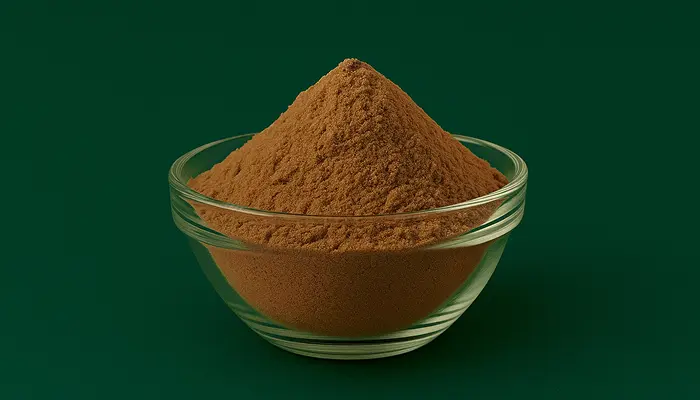
- Powder (Churna) — traditionally taken with warm water, honey or ghee
- Capsules / Tablets — convenient for consistent dosage
- Decoction (Kashayam) — used for deeper detoxification or chronic disorders
Key Research Highlights
Haritaki's traditional claims are increasingly supported by clinical and laboratory research across multiple systems.
- Laxative and digestive action — enhances colonic motility without causing dependency
- Neuroprotective — chebulinic acid shown to protect neurons from oxidative damage
- Anti-diabetic — improves glucose utilization and reduces blood-sugar levels
- Antibacterial and antifungal — effective against E. coli, Staphylococcus aureus and Candida albicans
- Wound healing — promotes collagen synthesis and tissue regeneration
Haritaki is also a principal component in formulations used for gut-brain axis modulation, panchakarma detox and longevity support.
Precautions & Contraindications
Haritaki is well tolerated but should be used mindfully in certain conditions due to its drying and detoxifying qualities.
- Pregnancy — avoid high doses due to uterine-stimulation risk
- Severe debility or emaciation — may increase dryness
- Diarrhea or dehydration — its cleansing effect can aggravate
References
- Saleem, A., et al. (2002). Antioxidant and hepatoprotective effects of Terminalia chebula. Journal of Ethnopharmacology, 81(3), 327–330.
- Bag, A., et al. (2009). Preclinical studies on antidiabetic effect of Terminalia chebula extract. Journal of Pharmacy and Pharmacology, 61(9), 1217–1223.
- Kumar, R. S., et al. (2006). Wound healing and antioxidant activity of Terminalia chebula fruit extract in rats. International Journal of Tissue Reactions, 28(3–4), 89–94.
- Naik, G. H., et al. (2004). Comparative antioxidant activity of individual herbal components used in Ayurvedic medicine. Phytotherapy Research, 18(7), 561–566.
- Rani, N., et al. (2011). Evaluation of antimicrobial potential of Terminalia chebula fruit extract. International Journal of Pharmaceutical Sciences and Research, 2(1), 78–82.
Uses & benefits
Gentle laxative and digestive action that enhances colonic motility without dependency; neuroprotective activity of chebulinic acid against oxidative neuronal damage; anti-diabetic improvement of glucose utilization; antibacterial and antifungal effect against E. coli, S. aureus and C. albicans; and wound healing through collagen synthesis and tissue regeneration.
A Rasayana rejuvenative tonic supporting gut integrity, regular elimination and evening detox routines; a Medhya brain tonic for memory, concentration and stress resilience; and an antioxidant-rich ingredient for oral care, eye health and skin formulations — central to Triphala and longevity blends.
Related botanical extracts

Source clinically researched botanicals.
Partner with GreenSpace Herbs for standardized, quality-assured extracts.